
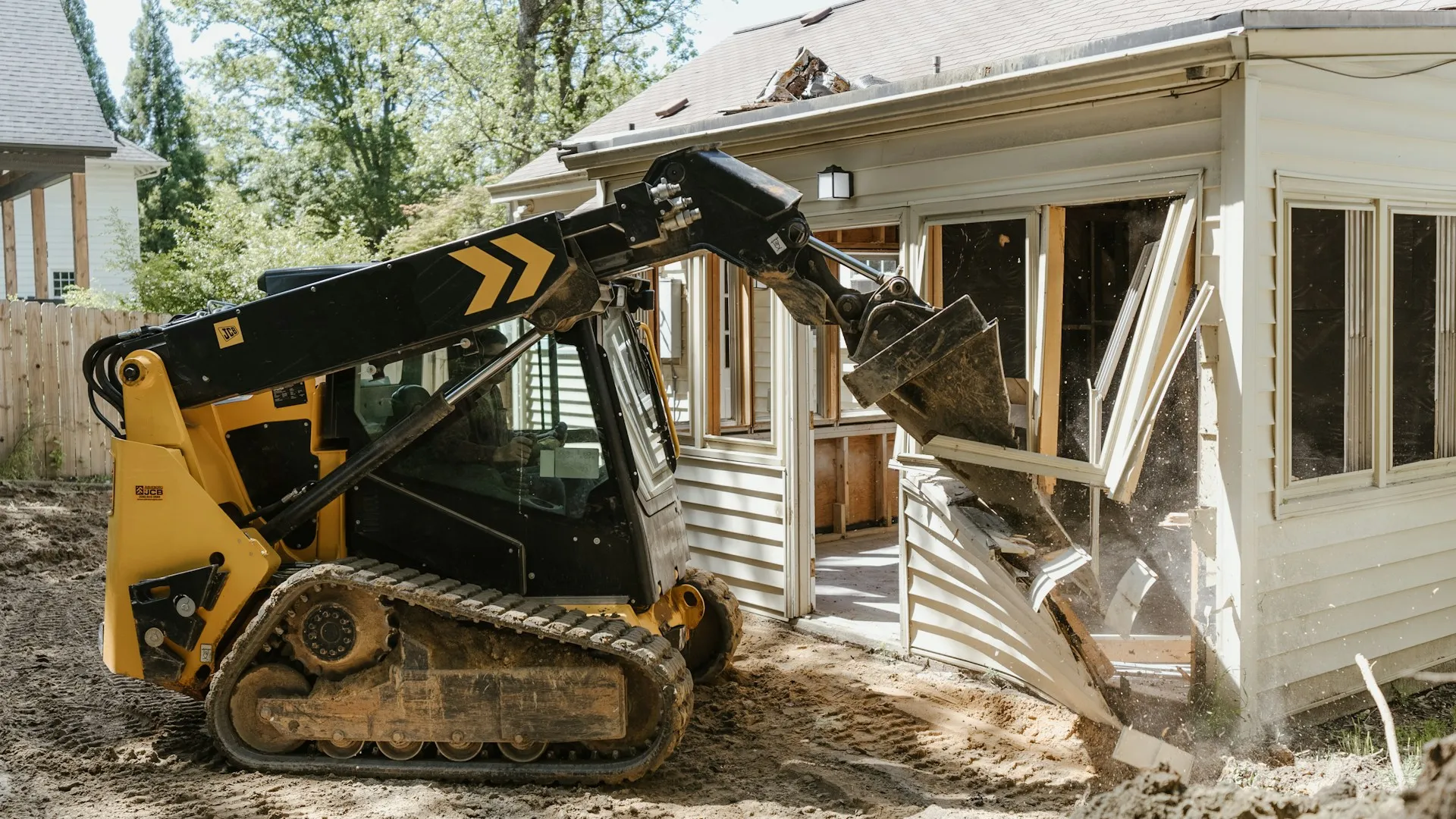
Demolition Contractors in Newbury Park
Strip-Outs, Pools & Teardowns · Licensed & Insured · Lic. #1027281
Demolition is the first construction decision, not the absence of one. What comes out of a Newbury Park house, and in what order, sets up everything that follows: the remodel that starts on schedule because the strip-out protected the systems staying behind, or the teardown that clears a 1960s structure for the rebuild taking its place. Master Construction runs demolition as a licensed, insured general contractor (Lic. #1027281) across Newbury Park, which means the crew tearing out is planning for the crew building back. The county service is on our demolition and excavation page.
Interior Strip-Outs That Set Up the Remodel
Most of our demolition happens indoors: kitchens and bathrooms stripped for remodels, flooring and mortar beds lifted, walls opened for new floor plans. Done by a contractor rather than a wrecking crew, the strip-out is surgical, plumbing capped instead of crushed, circuits identified and made safe, the framing that stays protected from the enthusiasm aimed at the framing that goes.
The 1960s housing stock around Casa Conejo adds a legal and practical layer: materials of that era can contain asbestos, in flooring mastics, acoustic ceilings, wall textures and duct wrap, and lead paint is presumed on anything painted before 1978. Suspect materials get tested before disturbance and abated properly when the tests say so. It is not optional, and a demolition bid that never mentions it is a bid planning to find out on your dust.
Containment and hauling are part of the craft: sealed barriers and negative air keep an occupied house livable through a strip-out, debris moves through a planned route, and recyclable material, concrete, metal, clean wood, gets sorted rather than landfilled by default.
Salvage has quiet value too. Hardwood worth donating, cabinets a reuse yard will take, appliances with life left in them: pulling these intact costs an hour, trims the disposal bill and shrinks the waste stream, and owners are welcome to flag anything they want saved before the crew starts.
Pools, Garages and Whole Structures
Pool removal is a rising request in the tracts, where 1990s pools have aged into maintenance bills the family that swims twice a summer no longer wants. Removal is either partial, walls broken down, the shell drained, punctured and engineered backfill compacted in lifts, or complete, with all shell material out. The difference matters at resale and for what can be built on the spot later, and we spell it out before you choose. Compaction is the whole game on this clay; a cheap backfill becomes a sinking patio.
Detached structures, tired garages, patio rooms from decades past, additions built without permits that inspection has finally caught up with, come down cleanly with utilities disconnected properly and foundations either removed or prepped for what replaces them. Our concrete crews often pour the replacement slab the same week.
Whole-house teardowns for rebuild projects are the biggest version: utility disconnects coordinated with each provider, surveys completed, neighbors noticed, and the lot delivered graded and ready for foundations. Because we build what comes next, the site is cleared to a construction plan, not just to bare dirt.
Permits, Neighbors and Portfolio Work
Demolition permits run through the Thousand Oaks building division, which serves Newbury Park as part of the City of Thousand Oaks, with utility sign-offs and, for the older stock, hazardous material clearances ahead of the wrecking. We manage that sequence start to finish, because a demolition that starts before its paperwork lands can stop a whole project for months.
Neighbor relations are part of the job in a town this settled. Dust control with water during the work, street cleaning behind the haul trucks, honest notice about the loud days, and working hours kept inside the rules: these cost little and preserve the goodwill a construction project spends for months afterward. On tight cul-de-sacs we plan truck routing before the first bin arrives.
Property managers and HOA boards use us for the recurring version: unit strip-outs between tenants on fixed day counts, fire- or water-damaged interiors cleared for rebuild, common-area structures removed and made safe. That work runs with certificates of insurance, photo documentation of pre-existing conditions, and disposal manifests the file will want later, all under the same contract as the rebuild that follows.
Demolition Services in Newbury Park
- Kitchen & bath strip-outs
- Interior wall & floor removal
- Asbestos & lead surveys first
- Pool removal & certified backfill
- Garage & structure teardowns
- Whole-house demolition for rebuilds
- Utility disconnect coordination
- Containment & dust control
- Concrete & hardscape removal
- Unit turnover & damage clear-outs
FAQ
Newbury Park Demolition - FAQ
Do I need a permit to demolish anything?
Structures, yes: garages, patio enclosures, pools and whole houses all get permits through the Thousand Oaks building division, with utility sign-offs first. Interior strip-outs ride on the remodel's permit. We map your project to the right paperwork before anything comes down.
Why does demolition need asbestos testing in an older house?
Because 1960s materials, flooring adhesives, ceiling textures, duct wrap, routinely contain it, and disturbing it without testing is both illegal and genuinely hazardous. Testing is quick and cheap; contaminating a house is neither. Bids that skip the subject are telling you something.
Partial or full pool removal: which should I choose?
Partial costs less and suits most yards; full removal costs more and leaves the site buildable and cleanly disclosable. The compaction of the backfill matters more than the method label on this clay soil, and ours is engineered and documented either way.
Can you strip a kitchen while we live in the house?
Yes, routinely. Sealed barriers, negative air and a planned debris route keep the dust in the work zone, utilities to the rest of the house stay live, and the loud phase is scheduled in announced windows. Occupied demolition is a discipline, and it is ours.
How long does a whole-house teardown take?
The machine work is days; the sequence around it is weeks: utility disconnects, hazardous material clearance and permits come first, grading and haul-off follow. We run that timeline in parallel with rebuild design so the lot's idle time approaches zero.
What happens to the debris?
It gets sorted, not just dumped. Concrete and asphalt go to crushing, metals to recyclers, clean wood to green processing, and the balance to landfill as the last resort. Disposal documentation comes back to you, which matters for permits and for conscience alike.
Do you handle demolition for managed properties?
Yes, as the front end of turnover and damage work: units stripped to a rebuild-ready state on fixed day counts, damaged interiors cleared with insurer-grade documentation, and common structures removed safely. Boards and managers get certificates of insurance, photos and manifests without chasing them.
Related Services
Demolition is step one of something. See home remodeling in Newbury Park, custom home building, concrete work, or the county-wide demolition and excavation page.
Inquiries
Something Coming Out Before Something Goes In?
Call (805) 667-8800 and get the surveys, permits and sequence handled by the crew that builds what follows.