
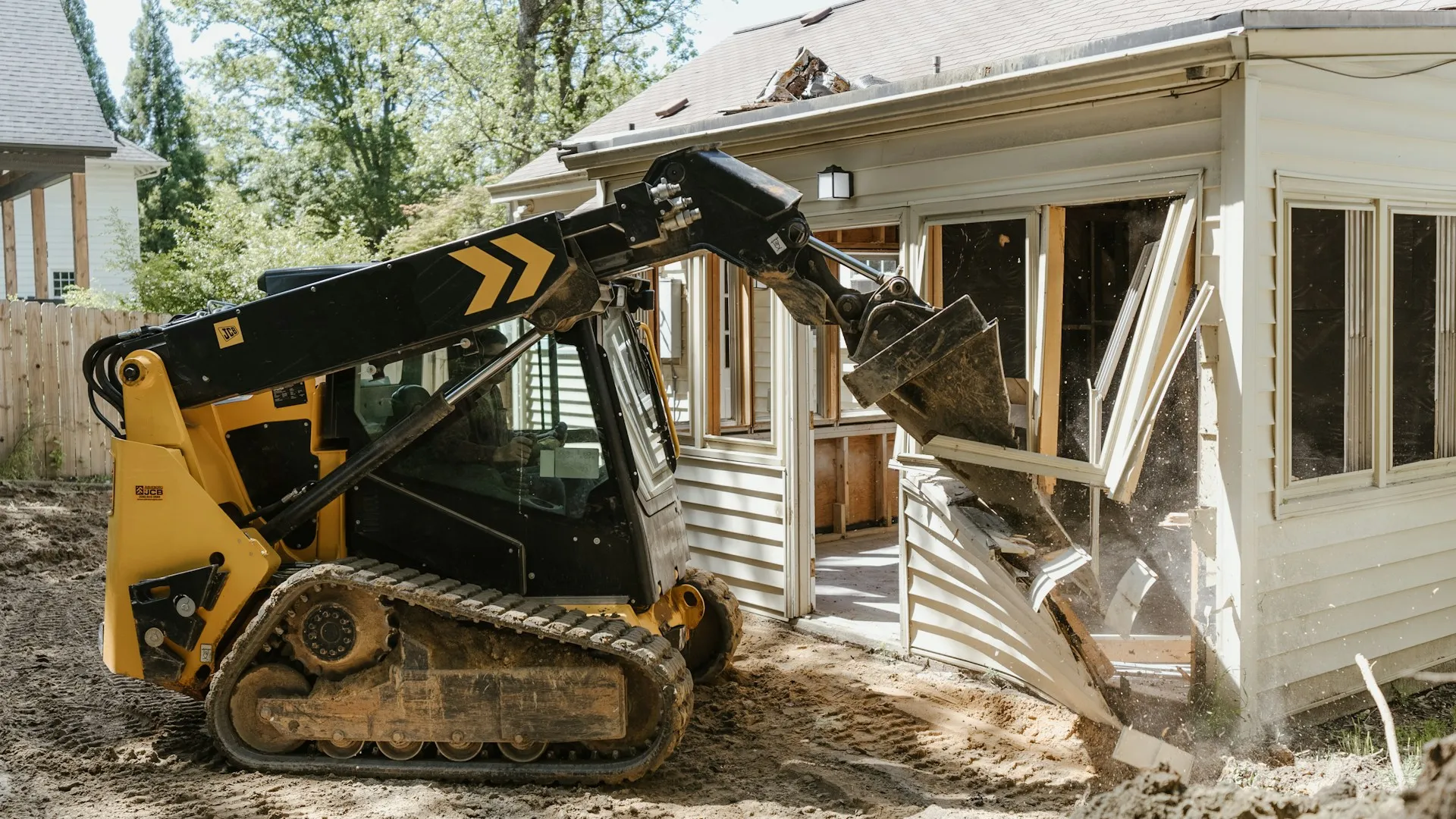
Demolition & Site Clearing on Somis Acreage
Barns, Structures & Interiors · Licensed & Insured · Lic. #1027281 · Since 1994
Old agricultural buildings are the signature demolition job in Somis: barns past saving, packing sheds from a previous operation, water tanks, failed outbuildings and the accumulated structures a parcel collects over eighty years of work. Taking them down safely, near animals, groves and buried utilities nobody mapped, is a planning exercise before it is an equipment exercise. Master Construction has cleared and demolished across the Las Posas Valley for over 30 years, licensed and insured (Lic. #1027281), based a short drive away in Ventura. The county-wide practice lives on our demolition and excavation page.
Taking Down Barns and Ag Structures Safely
An old barn is not a house, and it does not come down like one. Decades of modifications hide unclear load paths, roofs sag over rotten framing that fails unpredictably, and the building may still hold hay, chemicals from an earlier operation, or equipment worth saving. We assess before touching anything: what is structurally live, what materials need special handling, what gets salvaged. Old barn wood and corrugated steel have real value, and owners get the salvage conversation before the excavator gets the demolition one.
Age brings regulated materials. Structures from the mid-century and earlier can carry lead paint and asbestos in siding, roofing and pipe insulation, and rural buildings escaped none of it. Testing comes first where age or materials suggest it, and abatement, where needed, runs through licensed specialists we coordinate, because handling that wrong converts a demolition into a liability with your name on the deed.
What is under and around the structure matters as much as the structure. Rural parcels hide unmapped septic tanks, abandoned wells, buried fuel tanks and decades of undocumented pipe and wire, and an excavator finding any of them by surprise is the expensive version of discovery. We locate, probe and dig carefully in the zones history makes suspicious, and we treat every old ag parcel as if it kept secrets, because they all do.
Dust, Animals and Working Around a Live Property
Demolition on a working parcel answers to neighbors that city demo never meets: horses spook, dust drifts onto groves and row crops, and the operation around the teardown does not pause. Dust control is a plan, not a hose, water applied during takedown and loading, work sequenced against the wind forecast, and haul routes chosen to keep debris and dust away from stock, arenas and planted ground. Around animals we coordinate schedules with whoever manages them, because a crashing roof panel and a turnout schedule need to know about each other.
Interior and selective demolition is the quieter half of the practice: gutting ranch house interiors ahead of remodels, removing additions that failed, cutting openings in walls that turn out to be structural, and stripping fire- or water-damaged material cleanly so rebuilding starts from sound bones. Selective demo rewards restraint and layout knowledge, and as the contractor who will rebuild, we cut exactly what the next phase needs and not a stud more.
Debris on rural jobs runs to volume: concrete, old wood, steel roofing, fencing, and the informal dump every old parcel accumulates somewhere. We sort for recycling, concrete crushed, metal scrapped, clean wood diverted, haul what remains legally, and run magnets over ground where hooves and tires will travel, because a demolition that leaves nails in a pasture was not finished.
Permits, What Comes Next and Clearing for the Future
Structure demolition in Somis is permitted through the county building department, and rural parcels add their own review layers: septic and well decommissioning have required procedures, grading rules apply when clearing changes drainage, and removing a structure can affect what zoning lets you rebuild in its place. That last point deserves respect: on ag-zoned land, an existing structure can carry rights a vacant pad does not, and we flag that question before the excavator answers it permanently.
Most demolition is the first chapter of something: a cleared pad for a new home or barn, an opened floor plan, room for the new driveway and slabs. Because we are the contractor on both sides of the teardown, demolition gets planned against what follows, pads left at useful grades, utilities capped where the next building wants them, access preserved for the construction that comes next. Demo-only contractors leave a hole; we leave a site ready.
Ranch managers, estate managers and investors bring us the cleanup projects that make parcels safer and more valuable: collapsing structures removed before they injure someone or attract citation, old tanks and debris fields cleared before a sale, and multi-structure cleanups phased across seasons with written pricing owners approve remotely. A parcel cleared of its liabilities appraises better and insures easier, and that math usually pays for the excavator.
Demolition Services in Somis
- Barn & outbuilding removal
- Agricultural structure teardowns
- Salvage of barn wood & steel
- Lead & asbestos testing coordination
- Interior & selective demolition
- Site clearing & debris fields
- Septic & well decommission coordination
- Dust control near stock & groves
- Concrete & metal recycling
- County demolition permits
FAQ
Somis Demolition - FAQ
Do I need a permit to take down an old barn?
Yes, structure demolition runs through the county building department, and utility disconnections and any septic or well decommissioning carry their own required procedures. We handle the filings, and we check one more thing first: whether removing the structure changes what zoning lets you rebuild there.
Is the old wood and metal worth anything?
Often yes. Weathered barn wood and corrugated steel have real salvage markets, and owners sometimes keep material for projects on the property. We have the salvage conversation before demolition starts, because value that leaves in a debris box never comes back.
What about asbestos or lead in old farm buildings?
Common enough that age triggers testing on our jobs. Mid-century siding, roofing and insulation can carry both, and rural buildings were not exempt. Where results demand it, licensed abatement runs before demolition, coordinated by us, because shortcuts here become the owner's liability.
Can you work near horses and livestock?
Yes, with coordination as part of the plan: takedown sequenced against turnout and feeding, dust watered down and worked with the wind forecast, and haul routes kept away from stock and arenas. We finish with magnets over trafficked ground, because nails and hooves must never meet.
What surprises hide under old ag parcels?
Unmapped septic tanks, abandoned wells, buried fuel tanks and decades of undocumented pipe and wire. We probe and locate in the zones history makes suspicious and excavate carefully rather than finding infrastructure at bucket speed. Every old parcel keeps secrets; the plan assumes it.
Do you just haul everything to a landfill?
No. Concrete gets crushed and recycled, metal goes to scrap, clean wood gets diverted, and only the remainder is disposed, legally and documented. On volume-heavy rural jobs, sorting is both the responsible route and frequently the cheaper one.
Can you clear structures across several parcels for an owner or investor?
Yes. Managers and investors get phased multi-structure cleanup plans, written pricing approved remotely, and documentation of permits and disposal for each site. Clearing liabilities off a parcel improves appraisal and insurance, and we scope the work with that math in view.
Related Services
Demolition leads into custom homes in Somis, concrete and commercial construction. See the county-wide demolition and excavation page or everything we do in Somis.
Inquiries
Structures to Clear on Your Somis Parcel?
Call (805) 667-8800 for an assessment, salvage review and written demolition plan.