
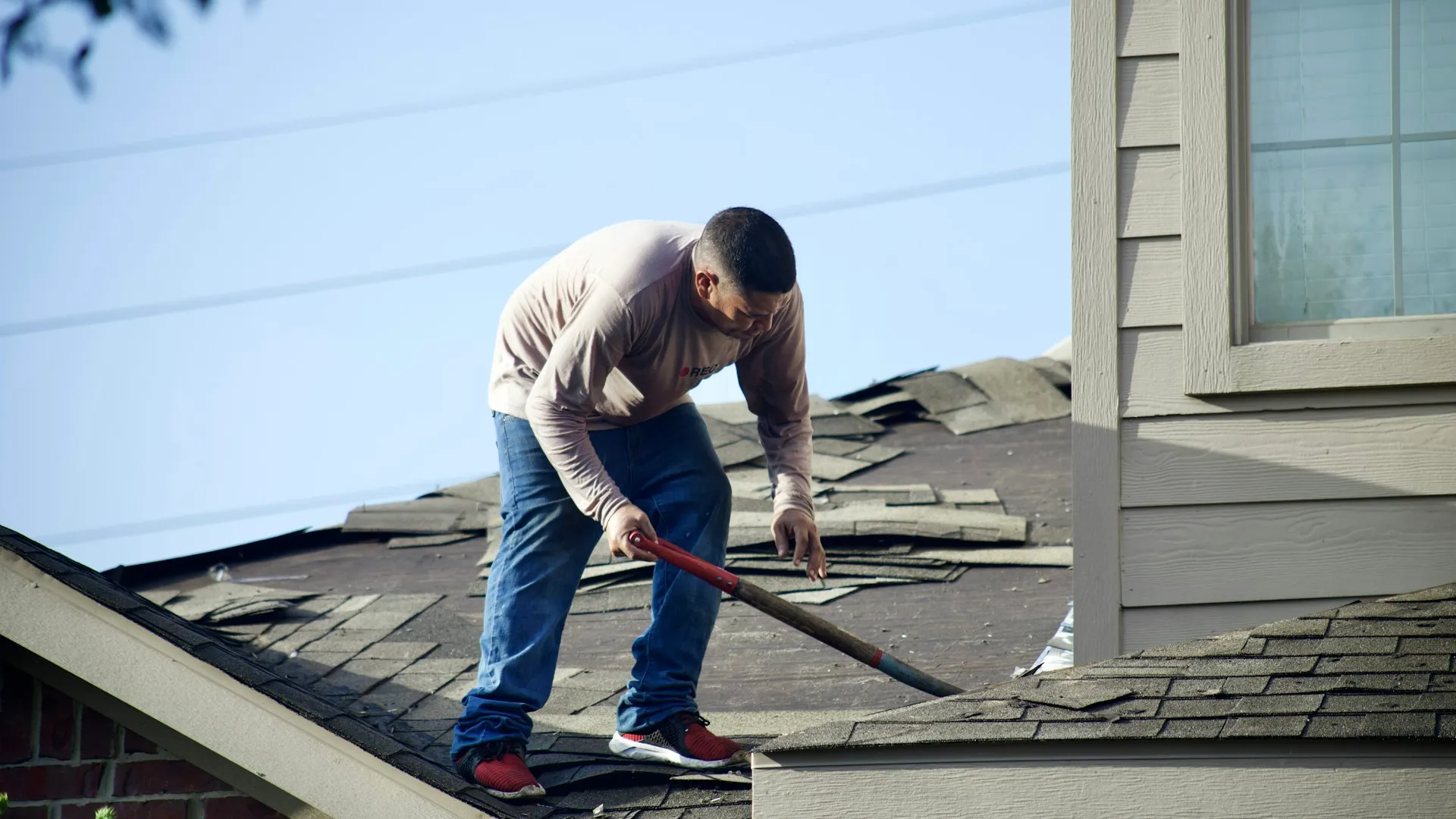
Roofs Built for Valley Sun and Fall Winds
Reroofs, Repairs & Leak Response · Licensed & Insured · Lic. #1027281
Roofs in Fillmore age from the top down and the edges in. A hundred-plus summer days of hard valley sun cook the oils out of asphalt shingles, then the dry winds that funnel through the Santa Clara River valley each fall pry at every tab the heat loosened. Master Construction roofs across the Heritage Valley as a licensed general contractor (Lic. #1027281) based in Ventura, with the county-wide practice on our roofing page. Around here, the roofs we installed years ago are our best advertising, because everyone can see them.
What Kills Roofs in This Valley
Heat first. Shingle asphalt is a petroleum product, and sustained rooftop temperatures well past 150 degrees age it years ahead of the label. The visible signs arrive in order: granules collecting in gutters, edges curling, then brittle tabs the first windstorm claims. An attic that cannot breathe makes it all worse, so every reroof we quote includes a ventilation assessment, because intake and exhaust vents are the cheapest years you can add to a roof here.
Wind second. When the dry northeast winds come through, they find every lifted shingle, loose ridge cap and aging tile fastener. We install to high-wind nailing patterns as standard practice, six nails, sealed starter courses, capped ridges, not as an upgrade, because the valley does not ask whether your roof paid for the upgrade.
Rain last, but decisively. Fillmore's rainfall arrives concentrated in a few winter storms, which means a small flashing failure that a drizzle climate would reveal gently gets discovered here at volume, mid-storm. Most of the water damage calls we take in January started on the roof in July.
The maintenance habit that pays best here is simple: gutters and valleys cleared before the first storm, because leaf drop from mature trees and windblown orchard debris dam the exact channels winter needs open. We offer it as a quick fall service call, and it prevents more January leaks than any product upgrade.
Reroofs, Repairs and the Right Material for the House
Composition shingle is the workhorse for most Fillmore homes, and in this climate the spec matters: high-wind rated architectural shingles in lighter, heat-reflective colors, over sound sheathing and modern underlayment. The 2000s subdivisions are reaching reroof age nearly street by street, and doing it right once beats patching a tired roof through three more winters.
Tile roofs, common on the newer tracts, usually outlive their underlayment. The tile is fine at year thirty; the felt beneath it is not. We lift, re-paper and relay tile roofs, replacing broken pieces, which renews the roof for a fraction of new tile. Older homes near downtown often want materials that respect the house: dimensional shingles that suit a bungalow, standing-seam metal where a farmhouse can carry it, and metal for owners at the agricultural edges who want a fifty-year answer over barns and homes alike.
Repairs get honest triage. A roof with years left gets a proper repair, flashing, penetrations, a course of shingles, documented with photos you can keep. A roof that is done gets told so with evidence, not a scare quote.
Storm Response and the Whole-House View
When winter storms line up over the valley, we run leak response with tarping first and diagnosis after the sky clears, and the 24/7 emergency line, (805) 414-0840, is the number to keep. Because we are a general contractor, the interior repairs, ceilings, insulation, paint, follow under the same contract as the roof fix, and one company owns the whole chain from shingle to ceiling texture.
The whole-house view changes roof decisions too. If solar is anywhere in your plans, the roof under it must outlast the panels, so we sequence reroof and array together instead of letting a solar crew land panels on five-years-left shingles. Gutters, fascia repairs and attic insulation ride along on the same scaffold time, which is the cheap moment to do them.
Property managers get roof programs, not just roof jobs: documented inspections across a portfolio, prioritized repairs, and reroofs scheduled between tenancies where possible. HOA boards get uniform material specs across buildings and phased replacement plans their reserve studies can actually use.
Reroofs and structural repairs are permitted through the City of Fillmore, inspected under its contracted review arrangement, and we fold that paperwork into the schedule as a matter of course.
Roofing Services in Fillmore
- Complete reroofs, shingle & tile
- Tile lift & re-underlayment
- High-wind installation standards
- Leak diagnosis & repair
- 24/7 storm & emergency tarping
- Flashing, valley & penetration work
- Attic ventilation upgrades
- Metal roofing for homes & ag buildings
- Gutters, fascia & dry rot repair
- Portfolio & HOA roof programs
FAQ
Fillmore Roofing - FAQ
How long does a roof last in Fillmore?
Valley heat takes real years off the label. Quality architectural shingles that claim thirty years deliver closer to twenty to twenty-five here, less with poor attic ventilation. Tile lasts generations, but its underlayment needs renewal around year twenty-five to thirty.
What are the warning signs to watch for?
Granules in the gutters, curled or missing tabs after windy days, cracked tiles, and any ceiling stain at all. Catch it at the granule stage and you are buying a repair; catch it at the stain stage and you are often buying drywall too.
Can you fix my roof or does it need replacement?
We answer with photos from your actual roof. Plenty of leaks are flashing failures on roofs with years left, and we repair those gladly. When the field is brittle and the repairs would chase each other, we show you why and price the reroof.
My tile roof is leaking but the tile looks perfect. How?
The tile is the armor, not the waterproofing. The underlayment beneath it does the sealing, and it wears out decades before the tile does. Lifting the tile, re-papering and relaying is the standard cure and far cheaper than a new tile roof.
Should I reroof before adding solar?
If the roof has less life left than the panels, yes, and it should be one coordinated project. We sequence roof and array together so the mounts flash into fresh underlayment and nobody removes panels in year six for shingles.
What happens when I call about a mid-storm leak?
The 24/7 line, (805) 414-0840, gets a crew out for tarping and containment first. Diagnosis and permanent repair follow after the weather passes, and any interior damage gets folded into the same job rather than left for you to arrange separately.
Do you reroof rentals and HOA buildings?
Constantly. Managers get inspection reports per address and reroofs timed around tenancies; boards get one material spec across identical buildings and phased schedules that match reserve funding. Both get certificates of insurance before ladders go up.
Related Services
Roof issues connect with water damage restoration in Fillmore, solar installation, and exterior painting. Everything else is on the Fillmore page.
Inquiries
Roof Concerns in Fillmore?
Call (805) 667-8800 for an inspection with photos. Storm emergencies: (805) 414-0840, any hour.