
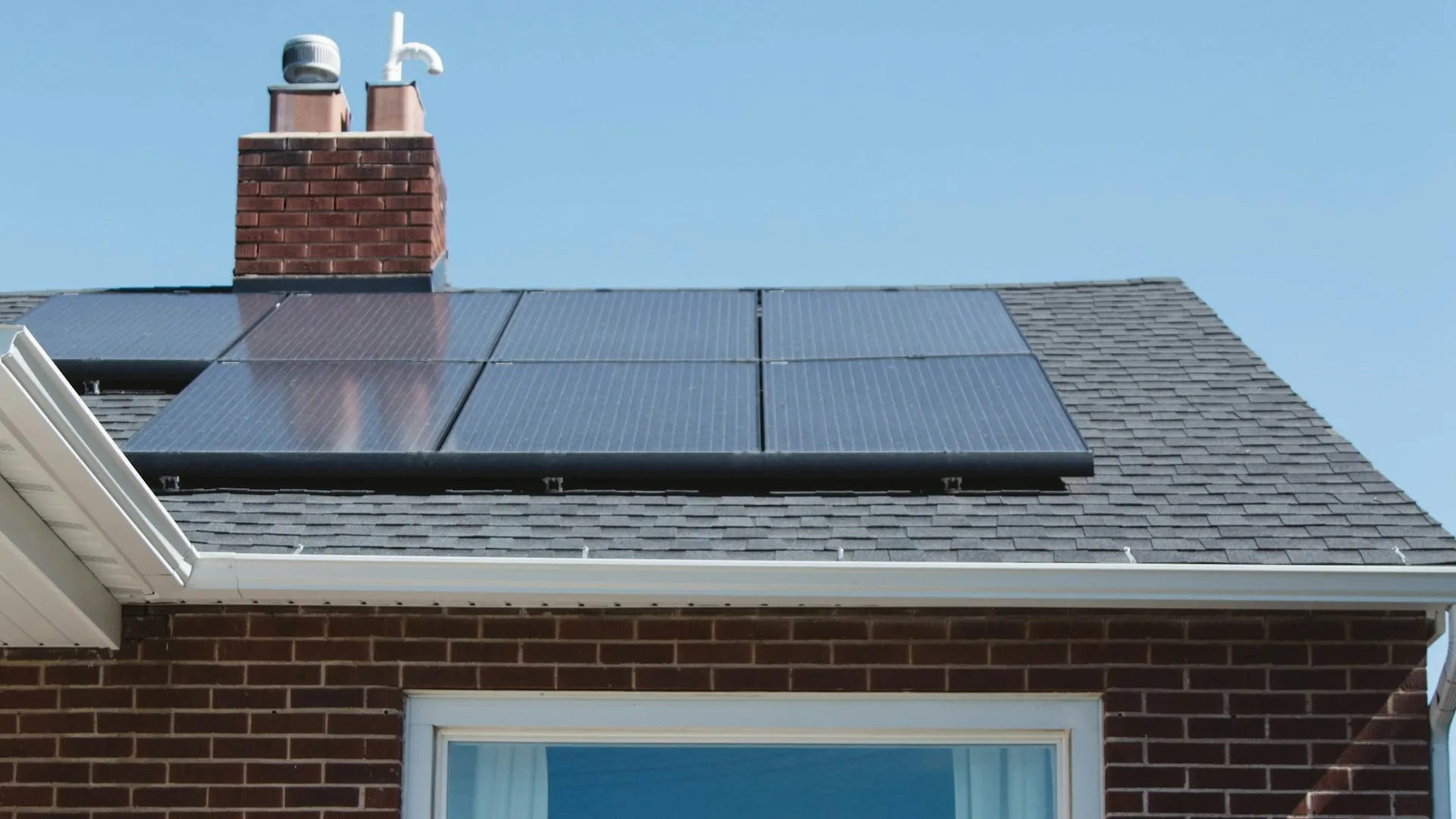
Solar Installation in Westlake Village
Solar, Batteries & Panel Upgrades · Licensed & Insured · Lic. #1027281 · Since 1994
Air conditioning is the biggest line on a Westlake Village summer power bill, and the same sun that creates the load can pay for it. Long, reliably clear summers make this valley strong solar territory, and the large roof planes on homes from the original build-out give arrays room to work. Master Construction (Lic. #1027281) designs and installs solar systems as a general contractor, which means the roof, the panel and the array are one project instead of three vendors.
Sizing Systems for Hot-Summer Households
Solar design starts with twelve months of usage data, not a sales target. Summer cooling dominates consumption here, so systems get sized against the July-August peak and the household's trajectory: an EV arriving next year, a heat pump conversion on the horizon, a pool pump running through the season. Designing for the household you are becoming costs slightly more once and pays monthly for decades.
Under current utility rate structures, batteries carry more of the economics than they used to. Storing midday production for evening use is where much of the value now lives, and backup capability during outages arrives as a side benefit. We model your usage against the rate plan honestly and show the arithmetic; some houses justify a large battery, some a small one, and the numbers, not the pitch, should decide.
Shade gets surveyed, not assumed. Mature trees are one of this community's genuine luxuries and one of solar's real constraints, so we map seasonal shade paths and design array placement around them, panel by panel, with optimizers where partial shade is unavoidable.
The Roof and Panel Questions Nobody Should Skip
An array outlives most roofs it lands on, which makes roof condition the first honest conversation. Original or aging underlayment under tile means the smart sequence is reroof first or both at once, because removing and reinstalling an array mid-roof-life is pure waste. As a contractor that does both, we integrate mounts and flashing into the roofing itself, the detail where leak risk either gets engineered out or built in.
The electrical panel is question two. Homes here still carrying original 100-amp service often need a panel upgrade to accept solar backfeed and the loads that tend to follow it, EV charging above all. We evaluate capacity during design and combine the upgrade into one permit package and one mobilization when it is needed.
Installation quality is mostly invisible, which is why it matters: correctly flashed penetrations, rail systems torqued to spec, wiring managed cleanly, and production monitoring configured before we leave. The array should disappear into the household's life, noticed only on the utility bill.
Ownership continues after commissioning, and so do we. Monitoring is configured and explained before we leave, so a string producing below expectation gets noticed in a week instead of a year. Panel cleaning matters more in a long dry season than owners expect, since months without rain let dust accumulate and quietly tax production. And when a roof repair, a remodel or an addition someday touches the array, the contractor who installed it is the right one to move it, which is an argument for hiring a builder rather than a sales organization in the first place.
HOA Review, Permits and the Long Ownership
Associations here review exterior changes, and solar is an exterior change, but California law sharply limits how far an association can restrict it. The productive path is cooperative: we prepare submittals showing layout, equipment and appearance, work within reasonable aesthetic guidance, and rely on the law's protections only when needed. Committees respond well to installers who arrive with complete answers, and approvals follow.
Permits run through the City of Westlake Village building department, on the Los Angeles County side of our service area, followed by utility interconnection paperwork before the system energizes. We manage the full chain, city and utility both, and our completed-project documentation keeps warranties and future service simple.
Boards and property managers have their own solar questions: clubhouse and common-facility arrays, carport structures, and policies for member applications. We advise associations on both sides of the table, installing community systems and helping boards process homeowner requests within the law, which makes us a useful contractor to know in an HOA-dominated city.
Financing questions get straight answers too: we walk owners through purchase and financing structures with real numbers and no urgency theater, because equipment this durable deserves a decision made at the owner's pace, not a salesperson's quota.
Solar Services in Westlake Village
- Usage-based system design
- Battery storage & backup circuits
- Shade mapping & array optimization
- Roof-integrated mounting & flashing
- Reroof-plus-solar packages
- Electrical panel upgrades
- EV-charger-ready design
- HOA submittals & approvals
- Permit & interconnection management
- Association & common-facility systems
FAQ
Solar in Westlake Village - FAQ
Can my HOA stop me from installing solar?
California law strongly protects homeowner solar and limits associations to reasonable restrictions that do not significantly raise cost or cut performance. Review still applies, so we submit complete, professional packages, and approvals in this city follow far more often than fights.
Is a battery worth it, or just panels?
Under today's rate structures, storage carries much of the financial case, shifting midday production into expensive evening hours, with outage backup as the bonus. We model both configurations against your actual usage and show you the payback math before you choose.
My roof is original. Solar now or roof first?
Roof first, or both together as one project. An array on a failing roof must come off and go back on when the roof is replaced, at real cost. Because we do both trades, the combined package sequences correctly and carries coherent warranties.
How big a system does a house here need?
Whatever your usage data says, typically driven by summer air conditioning and any EV charging. Twelve months of bills, a shade survey and a conversation about coming loads produce the answer. Oversizing wastes capital; undersizing wastes the roof. We size to the math.
What about the trees shading part of my roof?
We map the shade through the seasons and design around it: array placement on the clearest planes, panel-level optimizers where partial shade is unavoidable, and honest production estimates that include the trees. Nobody should buy projections drawn for a treeless roof.
Who handles the permit and utility paperwork?
We do, end to end: the city building department's process on this side of the county line, then utility interconnection before energizing. You sign where signatures are required and otherwise watch the monitoring app come online.
Can associations themselves go solar?
Yes, and several models work: clubhouse and facility arrays, carport-mounted systems and offsets for common-area electrical loads. Boards get engineering, financial modeling scaled to reserves and one contractor accountable for structure, electrical and roof alike.
Related Services
Solar connects to roofing in Westlake Village, electrical and panel upgrades, and HVAC conversion. County-wide: our solar installation page.
Inquiries
Make the Sun Cover the Cooling Bill
Call (805) 667-8800 with a recent utility bill and we'll run the real numbers.