
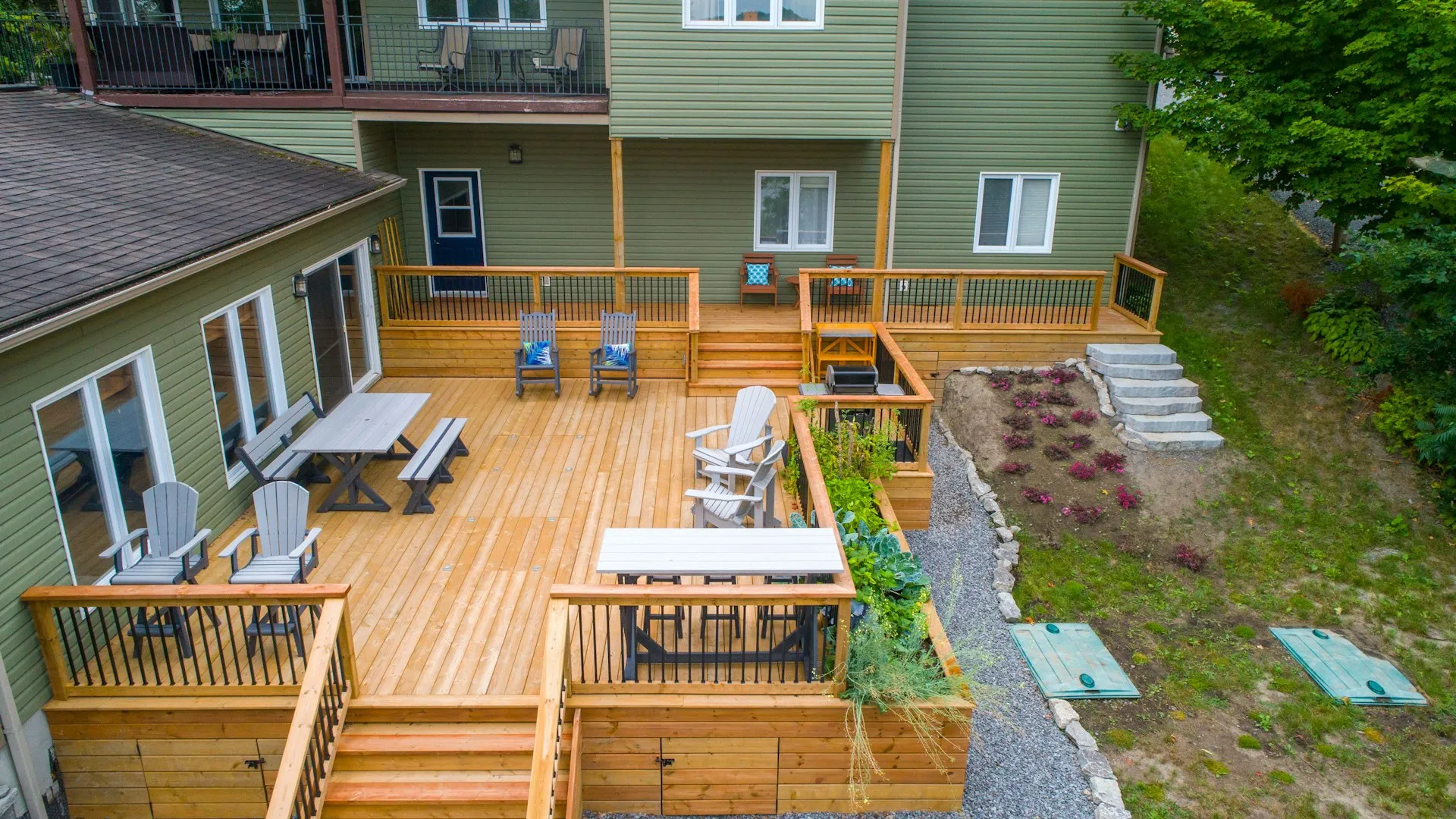
Decks Engineered for Hillsides and Hot Sun
Composite & Wood Decks · Licensed & Insured · Lic. #1027281 · Since 1994
Ask anyone with a bare deck in Simi Valley when they use it, and the answer is "not at 3 p.m. in August." Sun exposure is the first design input for a deck in this valley, ahead of size and even ahead of material, and shade is what separates decks that get used from decks that get looked at. Master Construction has built decks across Ventura County since 1994 as a licensed general contractor (Lic. #1027281), engineering included. The county page is decking and railing; the rest of our local work is on the Simi Valley page.
Materials Under an Unforgiving Sun
Every decking material pays a tax in this climate; the question is which one you would rather pay. Wood weathers fast under intense UV and needs refinishing on a short cycle here, but stays cooler underfoot and refinishes forever. Composite shrugs off the UV that destroys wood finishes, but dark composite in full valley sun gets genuinely hot, hot enough to matter for bare feet and dog paws, so color selection is a comfort decision, not a style one. Lighter composite lines and mineral-based boards run coolest of the engineered options.
We walk clients through this honestly with samples left in their actual sun, because a board that feels fine in a showroom can surprise you on a July afternoon. Fasteners, framing hardware and flashing get specified for decades, since the structure should outlive whichever surface you choose.
Railing follows use: open cable or slim pickets where there is a view to keep, solid or glass panels where afternoon wind is the issue, all code-height and engineered at the posts, where railings actually fail.
Shade, Slopes and Second Stories
The best Simi Valley decks are designed with their shade, not before it. A pergola or solid cover integrated at the framing stage costs less and stands straighter than one bolted on later, and running electrical during construction puts fans and lighting overhead for the price of wire instead of the price of retrofit. A covered deck with a fan is usable through a valley summer; an open one is usable in April. That single decision drives more satisfaction than any board choice.
Hillside lots along the city's edges are where decks earn their keep structurally, turning slopes into level outdoor floor with views over the valley. These are engineered structures: footings sized to the soil and slope, posts and beams calculated rather than copied from a flat-lot span table, and drainage under the deck handled so winter runoff moves through, not against, the footings. It is real construction, which is the point of hiring a general contractor for it.
Where the outdoor plan grows past the deck itself, our hardscaping crews carry patios, walls and outdoor kitchens under the same contract.
Repairs, Safety and the Paperwork
Existing decks age here on a predictable schedule: UV-checked boards, popped fasteners, dried-out ledger flashing, and railings that wiggle where they must not. Some need resurfacing, new boards and railing on a sound frame, which buys a nearly new deck at half the price. Some need structural repair. A few need retirement, and we will say which yours is after crawling under it, not after glancing at it. The ledger connection, where decks attach to the house, gets particular attention because it is where the dangerous failures happen.
Decks above modest heights and sizes are permitted, engineered structures in Simi Valley, and ours go through the city's plan review with calculations attached so the completeness check passes the first time. The permit is not bureaucracy; it is proof the thing your family stands on was designed to hold them.
Property managers and HOA boards carry legal responsibility for elevated structures, and we support them accordingly: inspection reports with photos, prioritized repair scopes, per-building pricing and insurance certificates, plus phased schedules that keep walkways and balconies in service during the work.
Deck Services in Simi Valley
- Composite & wood deck construction
- Heat-conscious board & color selection
- Integrated pergolas & covers
- Deck fans, lighting & electrical
- Hillside & elevated deck engineering
- Cable, glass & wood railing systems
- Resurfacing on sound frames
- Ledger, flashing & structural repair
- Balcony inspection & reports for boards
- City permits with engineering attached
FAQ
Simi Valley Decks - FAQ
Composite or wood for a deck in this heat?
Composite wins on maintenance under this UV load; wood wins on underfoot temperature and refinishability. The deciding question is usually color: dark composite in full sun gets hot enough to change how you use the deck. We leave samples in your yard for a sunny afternoon and let your feet vote.
Does a deck really need a shade structure?
Need, no. Use, yes: an uncovered Simi Valley deck sits empty from late morning to early evening all summer. A cover or pergola planned at the framing stage, with a fan and lights wired in during construction, roughly triples the hours the deck actually gets used, which is the whole return on the project.
Can you build on our sloped lot?
Yes, that is where decks make the most sense. Slope projects get engineered footings, calculated framing and under-deck drainage designed for winter runoff. They cost more than flat-yard decks and deliver more: level outdoor floor and a view where there was only bank. We quote from the actual slope, not a formula.
Is my existing deck worth resurfacing?
If the frame, footings and ledger are sound, resurfacing with new boards and railing delivers most of a new deck for roughly half the cost. If the structure has rot, undersized framing or a suspect ledger, money goes there first or nowhere. We inspect from underneath and give you the honest category.
Do decks need permits in Simi Valley?
Above modest height and size thresholds, yes, with engineering. We include the calculations in the submittal so the city's completeness review passes the first time, then handle inspections through final. Unpermitted decks surface at sale time and complicate insurance, so building it right is also the cheap path.
How long does a new deck take?
Construction typically runs one to three weeks depending on size, slope and whether a cover is integrated; design, engineering and the city review come before that. Fall through spring books lighter and builds in kinder weather, and a deck finished by May is ready for its whole first summer.
Do you inspect and rebuild decks for HOAs?
Yes. Boards responsible for balconies and elevated walkways get photographed inspection reports, prioritized repair scopes, per-building pricing and insurance certificates, with work phased so residents keep access. Managers get one contact and documentation their files and attorneys will like.
Related Services
Finishing the outdoors? See hardscaping in Simi Valley, concrete patios, exterior painting and staining, or the complete Simi Valley list.
Inquiries
Want a Deck You'll Use in August?
Call (805) 667-8800 for a site visit, sun-map and a design where the shade is part of the plan.